Success Is Not About Trying Hard

Tony Duong
Jun 7, 2026 ・ 4 min
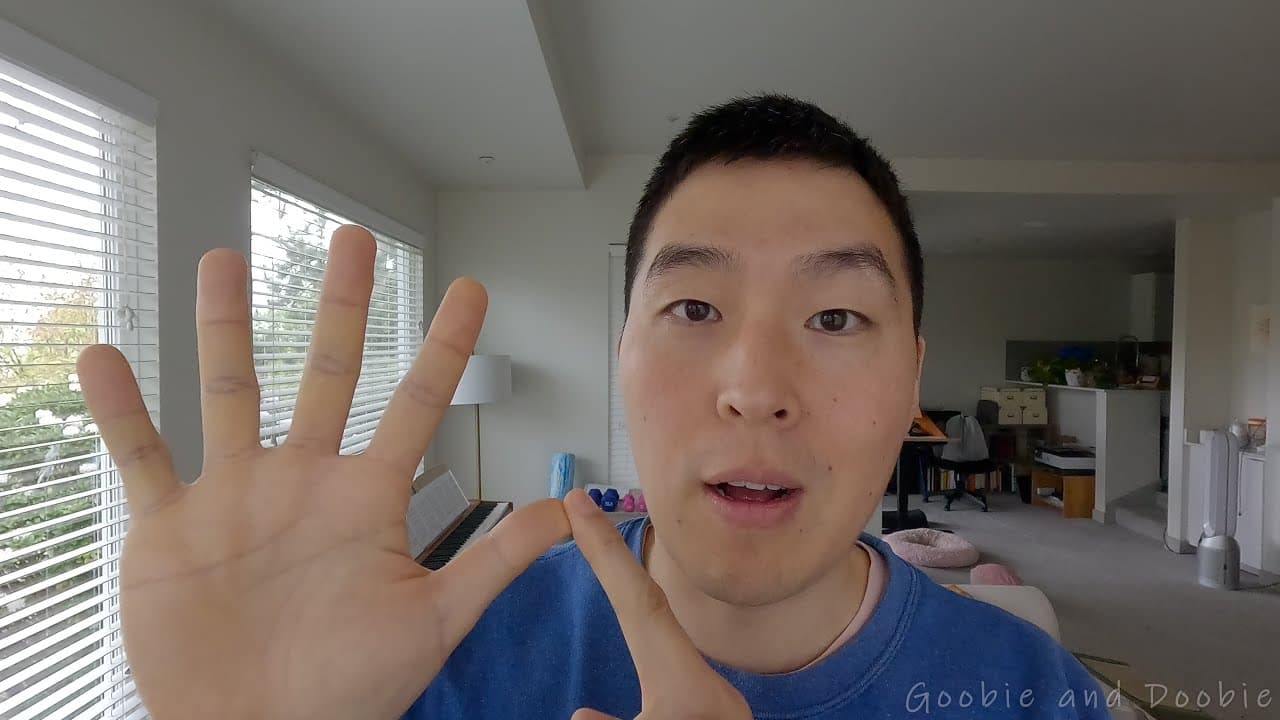
A reflection from Goobie (a former neurosurgeon turned YouTuber) on a counterintuitive idea: trying hard isn't what produces results. In fact, the harder you grind, the worse the outcome often is. What actually works is something quieter and more sustainable.
The Core Idea
Success here doesn't mean the "American dream" of wealth and status. It means achieving a goal you set for yourself — anything from washing the dishes to playing guitar to performing spine surgery.
The formula proposed:
Deliberate consistency mixed with some randomness, intuition, and reflection.
Each piece matters, and missing any one of them leads to either burnout or being "consistently bad."
How the Brain Learns
The argument is grounded in basic neuroscience:
- Error correction (cerebellum): When you miss — throwing a dart and hitting the wall — Purkinje cells in the cerebellum fire a signal that says "do something different next time."
- Reward (dopamine system): When you succeed, the brain's reward center releases dopamine, reinforcing "keep doing that."
- Automaticity: Repeated attempts refine a neural pathway until the skill becomes near-automatic (often mislabeled "muscle memory"). You stop consciously micromanaging each step.
The key: this refinement comes from doing something many times, not from straining on any single attempt.
The Four Ingredients
- Consistency — Show up and try many times. But consistency alone isn't enough; you can repeat the same mistake for years and stay bad at something.
- Randomness / variability — Every moment is slightly different, but you can also deliberately change things up (stand differently, grip differently) to explore the solution space.
- Intuition — Trust your instincts to guide which variations to try. Not all big changes help (throwing with your off-hand won't), so intuition steers useful experimentation.
- Reflection — Variation only helps if you observe the result and adapt. Try, observe, adjust — without judgment or strain.
The repeated distinction throughout: "Don't try hard — try many times."
Practical Examples
Acing multiple-choice exams
The standout practical tip for students:
- The correct answer is already on the page — you can often reason your way to it by elimination, even without fully knowing the material.
- Do one question, then immediately check the answer. This engages the brain's error/reward loop on every question. (Doing the whole test before reviewing all answers wastes this mechanism.)
- Circle wrong answers, loop back and redo only the circled ones, and repeat until everything is right.
- Counterintuitively, spend ~¼ of your time reading material and ~¾ doing practice questions — not the reverse. Reading every page "to try hard" is the wrong optimization.
Video games (PUBG)
- A sniper rifle demands perfect aim per shot — that's "trying hard," with long penalties for a miss.
- A machine gun lets you fire many rounds and adjust aim on the fly — "trying many times." More attempts, faster feedback, easier success.
- Consistency matters too: after days away, he was rusty and could feel it.
Running a YouTube channel
- The biggest insight: the less effort put into a video, the better it often performs. Simple talking-head videos (just set up the camera and talk) outperform heavily edited, elaborately shot ones.
- Simpler gear and setup beat the fancy condenser mic + iPhone rig that's harder to manage — the simpler tools let him show up consistently.
- He treats decoding the YouTube algorithm as a fun game, not a grind — doing it for his own curiosity rather than to force an outcome.
Key Takeaways
- Effort and outcome are not linearly related; grinding harder can actively hurt.
- Skills are built by repetition with feedback, leaning on the brain's natural error-correction and reward systems.
- The winning loop is: show up consistently → introduce variation → let intuition guide it → reflect and adapt.
- Lower the friction (simpler tools, lighter process) so consistency is actually sustainable.
- Enjoying the process for its own sake keeps you showing up — which is the part that compounds.