📝Note💻Tech
What Is Checksum: The Easiest Explanation You'll Ever See

Tony Duong
Apr 14, 2026 ・ 2 min
#checksum#data-integrity#networking#storage#databases#video
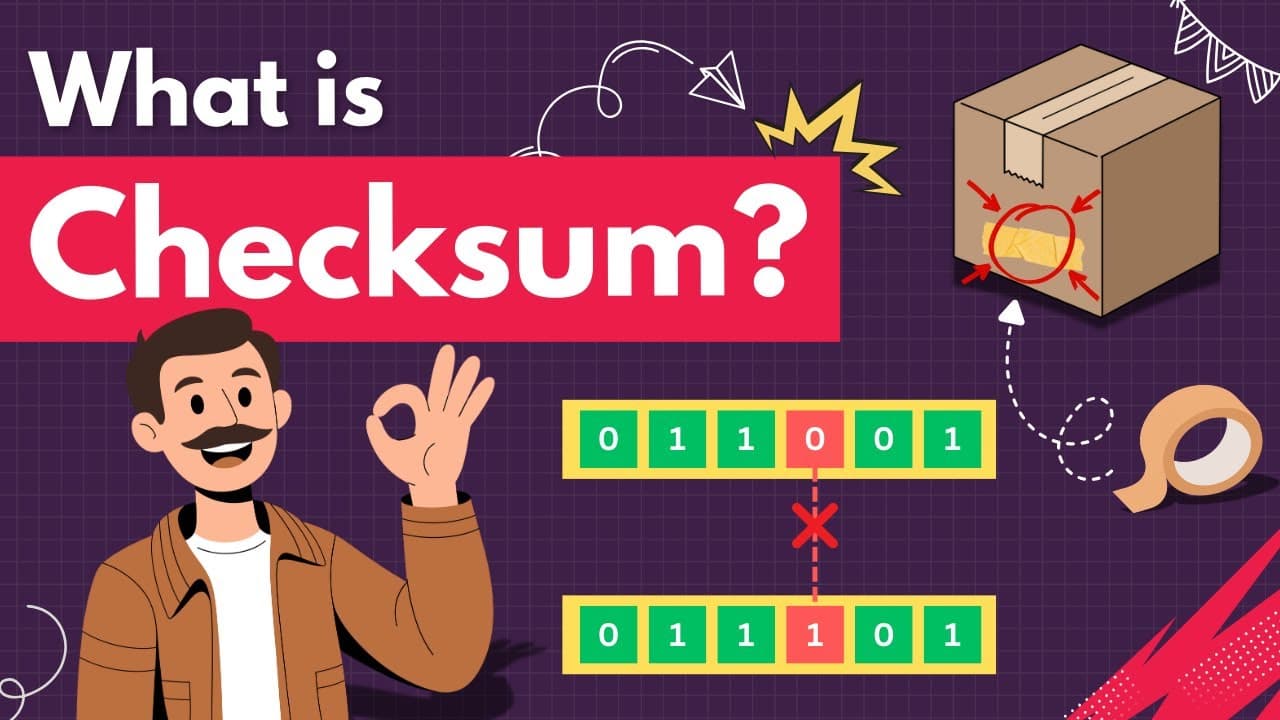
Overview
This video gives a simple mental model for checksums using a "box of chocolates" analogy: the sender includes a small note that says how many chocolates should be inside, and the receiver compares that note with what actually arrives.
In computing terms, that note is a checksum: a compact value derived from data so the receiver can detect whether anything changed in transit or storage.
What a Checksum Is
- a small value computed from the original bytes
- attached or transmitted with the data
- recomputed by the receiver on received bytes
- compared to the sender's checksum to detect mismatch
If the values match, data is likely intact. If they differ, corruption or tampering occurred.
Sender/Receiver Flow
- Sender runs data through a checksum algorithm.
- Sender sends both data and checksum.
- Receiver runs the same algorithm on received data.
- Receiver compares the two checksum values.
The key property is sensitivity: even a tiny bit flip usually changes the checksum result.
What Checksums Do and Do Not Do
Checksums are detection, not correction.
- they expose silent corruption that would otherwise go unnoticed
- they do not repair damaged data by themselves
- they let systems reject bad data early (for example, dropping a corrupted packet)
Common Real-World Uses
- File downloads: compare published checksum vs local checksum after download
- Network packets: detect in-transit bit errors and discard invalid packets
- Storage systems: hard drives, SSDs, and databases use internal checksums to catch corruption
Practical Takeaways
- checksums provide a low-cost integrity signal for every data handoff
- integrity checks should be end-to-end where possible, not only at one layer
- checksum verification is a baseline reliability guardrail in distributed systems
Key Takeaways
- checksum = small derived value used to verify data integrity
- sender and receiver must compute it the same way for comparison
- mismatch means data changed (corruption/tampering/bit flip)
- checksums make hidden failures visible, which is critical for reliable systems