📝Note💭Reflections
Why I Live a Simple Minimalist Life

Tony Duong
Jun 7, 2026 ・ 4 min
#minimalism#philosophy#reflection#simplicity
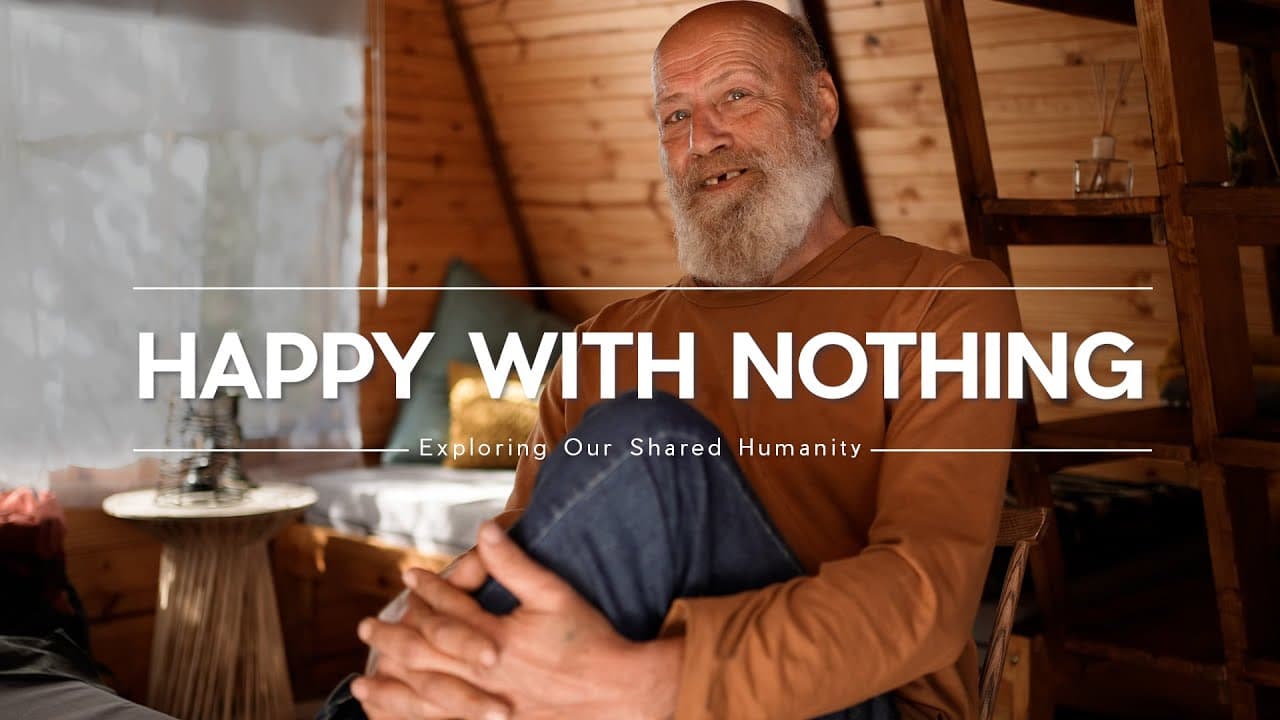
A quiet, philosophical portrait of Theo — a traveller who owns almost nothing and lives by volunteering. Once a jeweller dealing in gold, diamonds, and US dollars, he now carries everything he owns in a single bag and finds his days, and himself, in gardens.
From Accumulation to Release
- Theo spent decades as a businessman and jeweller, surrounded by gold, diamonds, rubies, and dollars. He says the "literal mountains of ore dug out of the earth" for his sake now weigh heavily on his conscience.
- The symbol of that old life was a heavy keyring — keys to protect everything he'd accumulated. When he was robbed and lost everything, he was relieved: the keys had been too heavy, "literally and psychologically."
- Without accumulated things, there's nothing to lock up — he hasn't held a key in a long time.
What "Owning Almost Nothing" Looks Like
- His entire kit weighs 9.6 kg. A few long pants, a neat shirt or two, thermal underwear, socks, and jackets — about half of it is what he's wearing.
- He's pragmatic, not dogmatic: you can't appear in public with nothing on, so you keep what you genuinely need.
- A key payoff of having little: small pleasures become enormous. A Coke with ice is "ten times more delicious" to him than to someone who has it often. Wanting less makes everything easier.
A Critique of the System, Not of People
- He describes himself as critical — but of the system and commerce, not of individuals. He doesn't fault anyone living sincerely by what they believe.
- He tries to "support commerce as little as possible," which he admits makes him "a bit of a freak."
Minimalism Made Possible by Volunteering
- He isn't only a minimalist — he's a volunteer, and that's what sustains the lifestyle.
- He has no house. For decades he's exchanged his labour — building gardens and beautifying spaces — for board and keep, working without payment.
- Gardens are his heaven: "One is closer to god in a garden than anywhere else on earth." Time blurs in them; he calls this presence awareness and consciousness — being here, now.
Mindful Choices and "Steeping" Yourself
- We make a million tiny choices daily; what matters is the mindfulness behind them. Some choices carry far greater impact and deserve real, deep reasons.
- His brother asked, "What are you immersed in?" Theo's answer: like a teabag steeped in water, you become what you steep yourself in. He deliberately immerses himself in situations of his choosing — which is part of why he wakes with hope and joy.
Integrity and the Mirror
- Integrity is "our behaviour when no one is watching" — and the point is that you are always visible to yourself.
- A psychologist friend sent him to stare into his own pupils in a mirror for 40 minutes. His takeaway: "I saw myself. I'm already who I want to be — I can see it in my eyes." You can't lie to yourself.
- Still, he frames himself as in process, like everyone — continually becoming more of who he wants to be, careful not to slip back into the "smug, arrogant guy" he once was.
Hope and Joy
- His joy rests "solely on respect for myself" — being true to what he believes.
- Hope, for him, has roots and reasons; it's tangible, and he gets daily proof of it. What others call synchronicity, he experiences as an everyday occurrence — "we've just got to tune into it."
Key Takeaways
- Possessions can quietly become burdens (and locks) we don't notice until they're gone.
- Wanting less amplifies the joy of small things and makes life easier.
- A radically simple life needs a sustaining structure — for Theo, volunteering for board and keep.
- Integrity is who you are unobserved; living in alignment with it is the real source of hope and joy.
- Presence, mindful choices, and "steeping" yourself in what you value shape who you become.